


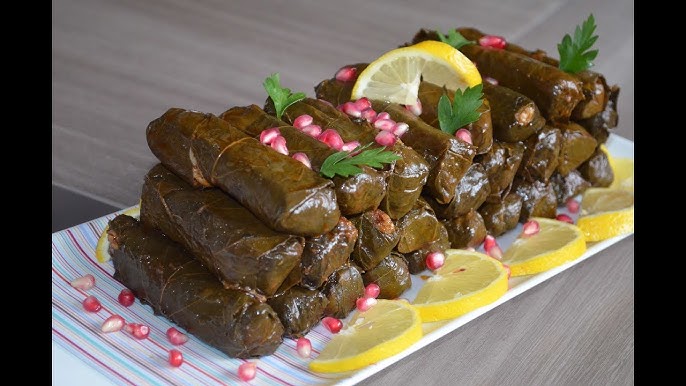
Syrian cuisine has always stood out with its wide variety of dishes, rich flavors, and deep cultural heritage. It is not just a way to satisfy hunger but a reflection of Syrian history, hospitality, and love for gathering. Among the many iconic dishes that Syria offers, one stands tall for its elegance, taste, and popularity across the Levant and beyond—Yalanji, or as some call it, vegetarian stuffed grape leaves.
Yalanji is a beloved dish in many Arab households, but its Syrian version holds a special place. The word “Yalanji” is of Turkish origin, meaning “fake” or “liar,” and it refers to the fact that it is a meatless version of the traditional "warak enab" (stuffed grape leaves). While the original dish contains rice, minced meat, and spices, Yalanji is entirely vegetarian, made with rice, tomatoes, onions, parsley, mint, and pomegranate molasses, all carefully wrapped in grape leaves and cooked in olive oil with a hint of lemon. This makes it not only delicious but also suitable for vegetarians and those seeking lighter, refreshing meals.
Although it is widely prepared across Syria, each region brings its own touch to Yalanji. In Damascus, for example, it is served cold and accompanied by yogurt or a drizzle of lemon juice. In coastal regions like Lattakia, you might find it with extra olive oil and garlic. The art of rolling the grape leaves is often passed down through generations, and it is common to find mothers and grandmothers teaching their children the perfect technique.
Aleppo, known as the capital of Syrian gastronomy, also embraces Yalanji with pride, adding its unique Aleppine spices and sometimes serving it as part of large mezze tables during festive occasions. Aleppo’s long history of culinary refinement ensures that even simple dishes like Yalanji are elevated to gourmet levels.
What makes Yalanji so special is not only its taste but its symbolism. It represents patience, craftsmanship, and the joy of sharing food with loved ones. Preparing Yalanji is often a social activity, where family members gather to roll, talk, and laugh—a tradition that brings hearts together before the meal even begins.
Syrian cuisine continues to be a bridge between the past and the present, between cultures and palates. And dishes like Yalanji remind us that even the simplest ingredients, when treated with care and tradition, can create a dish worthy of global admiration.
Comments